
SB 790’s Unintended Consequences: A Flawed Reciprocity Agreement Could Harm Californians
To explore more resources from other advocates on the limitations of SARA, click here to read why 22 state attorneys general have sounded the alarm, and click here to learn why the state of Washington is actively exploring alternatives through House Bill 1279.
California has long led the nation in protecting students from predatory, low-quality, and exploitative postsecondary institutions. But SB790, authored by Senator Christopher Cabaldon, threatens to remove critical safeguards that have shielded students from fraud and abuse for decades.
While the bill language also covers issues that TICAS and many partners have long called for, such as a centralized coordinating entity in the postsecondary space; at its core, SB 790 would, amongst other things, enable California, if certain requirements are met, to join State Authorization Reciprocity Agreements (SARA), a multi-state reciprocity agreement that enables out-of-state institutions to more easily enroll California students into their online programs. Proponents argue this will reduce regulatory burdens for California schools to offer their programs in other states and thereby generate additional revenue. However, the reality is that if California becomes a member of SARA via the amended language of SB 790, California would not be able to enforce many of its education-specific consumer protection laws except for Education Code Section 94897. This would harm California students and open up California’s postsecondary institutions to outside competition that does not have to play by the same rules.
Why this is a Step Backwards for California Student Protections
For 20 years, as online education has grown, Californians have benefited from stronger protections against low quality or exploitative programs than residents of other states. This vigilance has been essential, as weak consumer protection at the federal level has long enabled fraud, misrepresentations, and abuses, especially from for-profit and large online college programs. With the current federal government poised to weaken those protections even further by laying off staff and cutting the budget of (or potentially even eliminating) the Department of Education, it is more important than ever for California to maintain and strengthen the protections it provides to its residents.
If California joined SARA, there are many higher education consumer protections enacted by the California legislature that would no longer apply or be hard to enforce. Below are five examples.
- Out-of-state schools in SARA that close could leave California students unprotected and significantly harmed.
- California law states that when a school closes or discontinues a program, it is in default of its agreement with students and students should get a total refund unless the school arranges for the student to complete elsewhere.1California Education Code § 94927. This means not only are students entitled to a full refund, but they are protected from having to fully pay under the enrollment agreement and on private loans because the school is in breach of their enrollment contract. If California joins SARA, Californians enrolled in NC-SARA schools outside of California would not be protected by this law.
- Amendments to SB 790 remove the language that would allow California students enrolled in an out-of-state SARA school to potentially be able to access the Student Tuition Recovery Fund (STRF) if their school closes.2California Education Code §§ 94923, 94924, 92925, 94801.5. If California students are not eligible for reimbursement from the STRF, they would have to seek assistance from their school’s home state. However, many states do not have their own STRF fund, or if they do, it is severely underfunded, it may not provide any relief to students who do not live in that school’s home state, or they provide a surety bond which is different (and usually provides less coverage) than a STRF-like fund.
- Out-of-state schools in SARA could enroll California students in a program even if they are unable to obtain the necessary California license to work in the field.
- California law states that if a school offers a program in career field that requires licensure in California, the school must be approved by the appropriate state licensing agency so that a student who completes the program is eligible to sit for any required licensure examination.3California Education Code § 94899. Although there are federal requirements related to professional licensure programs, these are not the same as California’s requirements. And it is unclear whether the current Department of Education will have the staff or the desire to enforce any requirement placed upon schools. If California joins SARA, out-of-state schools can enroll Californians in a program that does not qualify the student to sit for a required licensure examination in California.
- California law states that a school should give students a copy of the requirements for license, try to determine if a student would be unable to obtain licensure, and not enroll students in a program if they are ineligible for licensure unless the student’s stated objective is other than licensure.4California Education Code § 94905. If California joins SARA, out-of-state schools would not have to comply with that law.
- Out-of-state schools in NC-SARA could withhold California students’ transcripts to collect a debt owed to the school.
- California law states that schools shall not refuse to provide a transcript to a student because the student owes a debt or condition giving a student their transcript on the payment of a debt or use a transcript as a tool for debt collection.5California Civil Code § 1788.93. If California joins SARA, Californians enrolled in out-of-state schools could be subject to debt collection via transcript withholding because California is limited in the ways in which it can enforce its prohibition on out-of-state schools doing that.
- Out-of-state schools in SARA could ask Californians to sign enrollment agreements and provide other important documents in English, even if the school recruited the student in another language or is aware that the student does not understand English.
- California law states that if a school recruits a student in a language other than English, the enrollment agreement, disclosures, and other statements shall be in that language and provides that if a student is unable to understand the terms of the enrollment agreement, the student shall have the right to obtain a clear explanation of the terms and conditions and all cancellation and refund policies in the student’s primary language.6California Education Code § 94906. If California joins SARA, out-of-state schools are not required to provide California students with critical documents in any language other than English or explain the terms in a student’s primary language.
- State legislators and regulators will give up their ability to determine which out-of-state schools can enroll California residents, regardless of their low-quality or bad outcomes, and data reporting on a program’s completion rates, placement rates, licensure exam pass rates, and salary/wages for graduates would not be required.7For example, see Article 18. Compliance, Enforcement, Process, and Penalties California Education Code § 94932 – 94945.
- For example, California requires the Bureau for Private Postsecondary Education to consider the following heightened risks when deciding whether to investigate a school: schools that receive over 70% of their revenue from government sources, have federal cohort default rates exceeding 15.5%, report student outcome measures that are far higher or lower than those at comparable schools, report a dramatic increase in enrollment, fail financial stability standards, or have been subjected to adverse actions by accreditors or other agencies.8California Education Code § 94941. If California joins SARA, it will have to give up its ability to apply laws like this to SARA schools.
Two Cautionary Tales: CollegeAmerica and Anthem College Online
The predatory actions and rapid closure of a large online education company called the Center for Higher Education (CEHE), which operated CollegeAmerica, Independence University, and other schools, provides an example of the potential harmful consequences of this bill. In August 2020, following an extensive trial, a Colorado court sided with the state’s Attorney General and found CEHE, CollegeAmerica, and other owners liable for deceptive practices and awarded a $3 million judgment. The Colorado court found that CEHE and CollegeAmerica used a detailed playbook to manipulate vulnerable students into enrolling in high-priced, low-quality programs, that the school directed admissions representatives to “enroll every student,” regardless of whether the student would likely graduate, that the school’s recruiters and advertisements greatly overstated starting salaries that graduates could earn, and that the school falsely inflated graduation rates. Independence University, which operated out of Utah, was approved to enroll students across the country under SARA, whereas CollegeAmerica was not a SARA member. Despite a significant court finding against Independence University’s owner, Utah took no meaningful action to revoke or limit Independence University’s operations through SARA. In 2021, Independence University lost its accreditation and access to federal funds, shut down classes, laid off most staff, and closed its doors. This left students with debt, limited options, and little to no recourse. This example demonstrates one of the core structural flaws in SARA: when oversight responsibility rests solely with a single “home” state, other states like California are blocked from enforcing their own consumer protection laws, even when their residents are harmed.
Another example is Anthem College Online, a degree-granting for-profit school headquartered and licensed in Arizona, which suddenly closed in August 2014 without providing students legitimate transfer or teach-out options. Because California had not yet established a process by which out-of-state colleges could register with the BPPE and access STRF, and this aspect of the school lacked a physical presence in California, California students who were enrolled in distance education programs did not qualify for any economic relief from California’s Student Tuition Recovery Fund. Additionally, California residents taking online classes also could not apply for relief from Arizona’s student protection fund because its law states that non-Arizona residents enrolled in distance education programs are not eligible for payment from the Arizona fund.9Ariz. Rev. Stat. Ann. § 32-3075(B). Arizona law may require certain schools to obtain surety bonds; however, these are usually insufficient to cover all student claim and administratively difficult for students to obtain reimbursement for lost payments or loans. Anthem College did not participate in SARA, but if California becomes a SARA member and a closure like Anthem College happened, California students would be unable to access a tuition recovery fund to help them.
If California joins SARA, out-of-state schools like CollegeAmerica and Anthem College will enroll California students in online programs, but California’s higher education consumer protection laws will be unable to fully protect them.
California Must Remain a Leader in Student Protections
By joining SARA, California would lose the ability to enforce the laws referenced above against out-of-state online schools and lose control over which out-of-state institutions can enroll Californians – essentially handing over that authority to states with weaker oversight. The reality is that for-profit schools pose a higher risk of consumer fraud to students and taxpayers due to their profit-driven priorities. Online-only programs operated by for-profit schools in states with fewer consumer protection laws can exacerbate this problem.
At a time when federal protections are under attack, California cannot afford to cede its ability to protect students from predatory schools. Instead of weakening its oversight, the state should focus on strengthening enforcement, increasing institutional accountability, and expanding financial protections for students.
We urge legislators to maintain California’s status quo and remain a steadfast leader in protecting California students and institutions from incoming predatory for-profit schools by voting NO on SB 790 (Cabaldon).
This blog was updated on April 17, 2025 to reflect the April 10th amendments to the bill and other relevant factors.
Meet Our Researchers
See all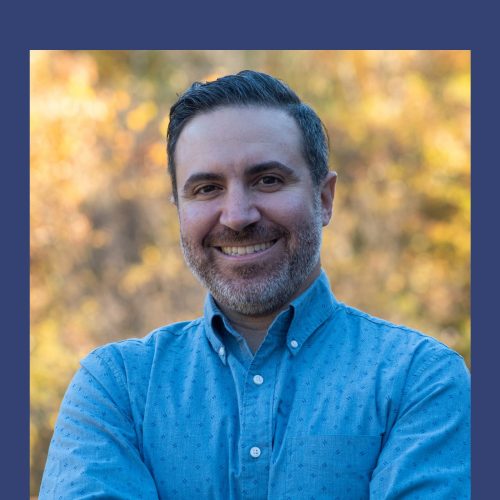
Christopher Madaio
Senior Advisor, Accountability
Christopher J. Madaio works closely with attorneys general, policymakers, and advocates to advance policies that hold institutions accountable and safeguard students’ educational investments.
